
Ok, we're approaching autumn and I thought of one of the most unlucky places in Italy: Molise. Famous for the massive migration, the pasta (no wonder) and as the birth place of political figure Antonio Di Pietro, who has been asking pretty much everyday in the last 3 years for Berlusconi to quit his role as prime minister. This said, Molise is one of the most isolated, marginalised areas of Italy.

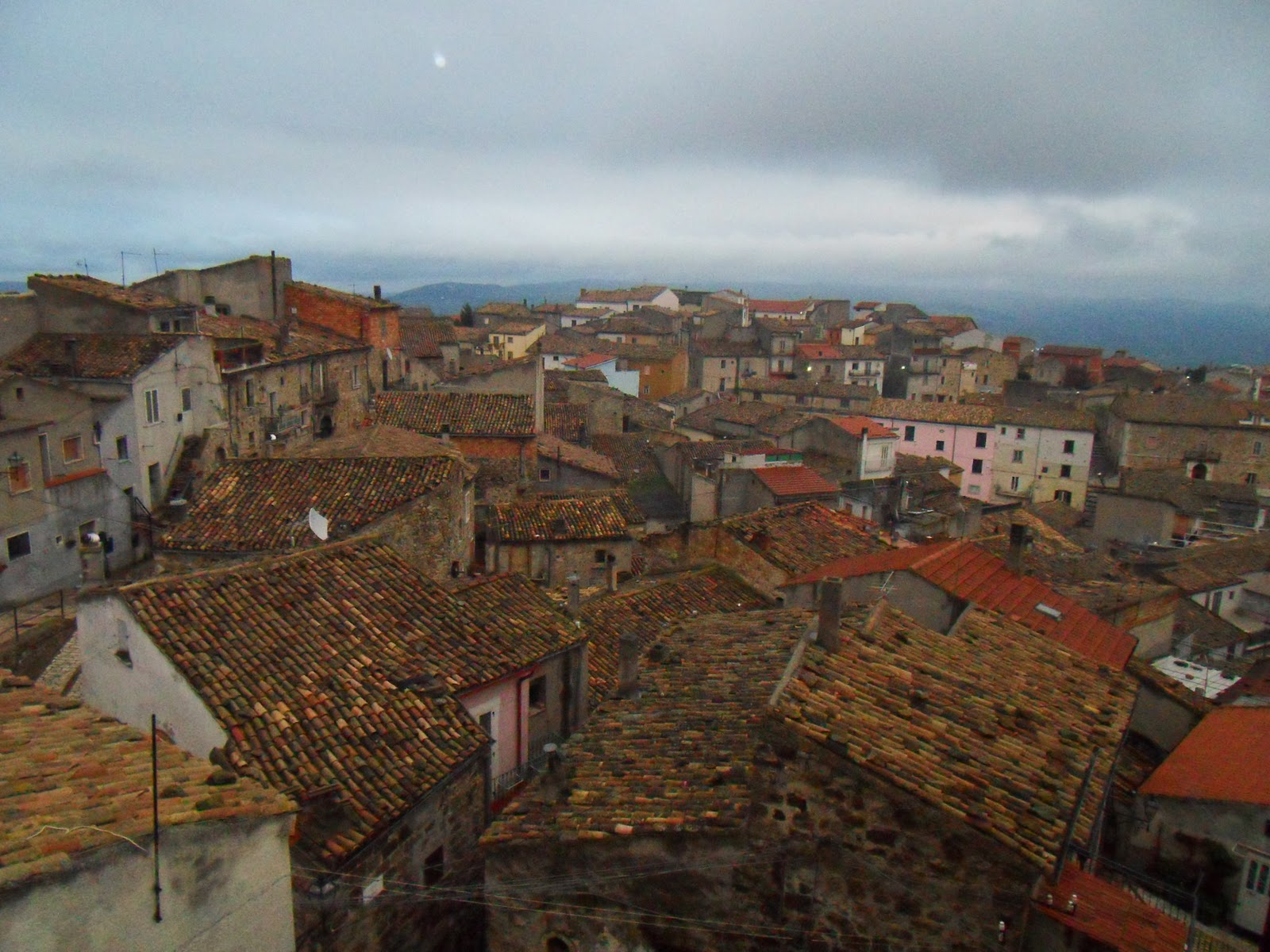
It's very unlikely you will even have a chance to go to this town, which is named Pietracatella. I happen to know it just because I have some relatives there. Basically Molise is made of mountains, and the towns are either in the valley, like Molise's capital Campobasso ("Kamp bash", as said in the local dialect) or on the moutains. Meaning: more isolation in an already isolated region. All the old houses of the so-called "nobles" though are still there untouched, as Pietracatella has known little war to destroy it, little tourism to restore it. It's there, like many other towns in Italy (outside of Tuscany), abandoned to itself but with a certain charme due to its sporadic history. In fact, I think the charme of towns like this is their being in between a "favela" and a small (unknown) medieval kingdom.

The most interesting fact to think about when it comes to southern Italy, is the fact that most of it wasn't Italy until the unification in the second half of the 19th century. Borbonic kingdom, local noble families turned into rural dynasties, and cyclical migrations are just as home in Pietracatella as in many other southern places. The buildings are gray'ing, the cement based restoring of the '60s led the way to a mix between past and present, in a typical italian fashion: never build a new idea, always fix the old one.

Like this, tradition is the richness of this and other places where you can find an unfinished wall forever to stay that way. On the other hand, folklore does manifest itself in particular moments, like Christmas, or weddings, where the locals strive to give the best party ever. All the local youths are involved in music, dance and the fiesta which has been the trait d'union between greek and roman and so on..

Anyway, it would be unfair to say that Molise has nothing to offer except for melancholia and Sturm und Drang, but this don't seem so bad if you come to think of it. If you go to Molise it's very likely you can be the only tourist in town for the last months, years, even decades, and in some cases, centuries. If you add to this that Molise is on the way to Campania across the Appennines from the Adriatic side to the Tirrenium, then yes, you might find interesting to think of actually exploring a bit Molise.
One thing you should remember is that regions are a relatively new "invention" in Italy, as they were created only in 1971. Which for Italy, it goes without saying, is pretty much more than contemporary, postmodernist. Anyway, the real area which you might be interested to think about is "Il Sannio", which actually includes parts of neighbouring Campania, especially the province of Benevento (where my parents come from, by the way). So I might be partial, and I surely am, but the "Sanniti" people did leave some pretty cool legends, ruins, and.. facial features. However, farmers in Molise and most of Sannio are a bit suspicious of cameras (at least the modern ones) so I had to settle for a picture of the ennnormous windmills in the area. Enjoy..

If you really liked the windmills and feel like some more Sturm und Drang, don't forget to waste your time with this atopic (unlikely) video below:


